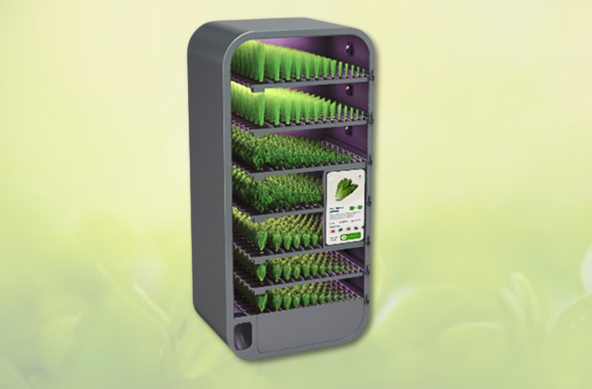
Spactory

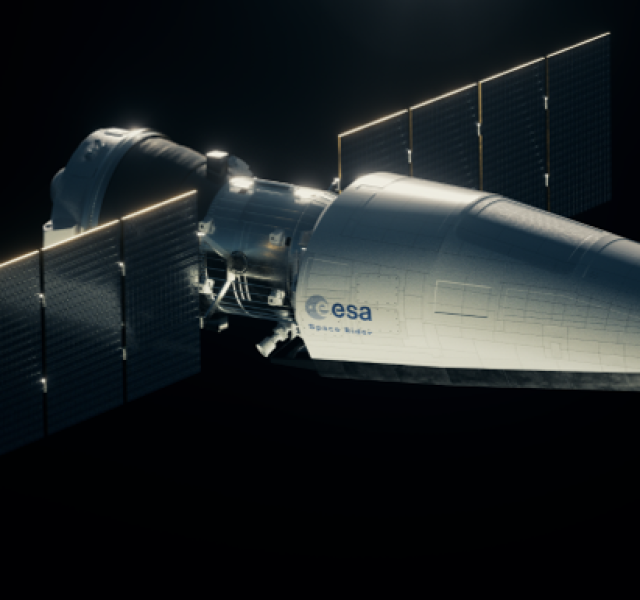
SpacePharma is building the first autonomous drug factory in microgravity. Their next-generation platform, Spactory, manufactures pharmaceutical-grade protein crystals in orbit and returns them to Earth on the ESA Space Rider — a reusable spacecraft designed for autonomous low-Earth-orbit experiments. Zeron is developing the full electronics and firmware stack: the on-board computer, power management, and eight independently controlled production cartridges that run the crystallization process end-to-end. This is our second-generation collaboration with SpacePharma, following eight successful flights of their autonomous Lab-on-a-Chip platform.

Picture1

Production:

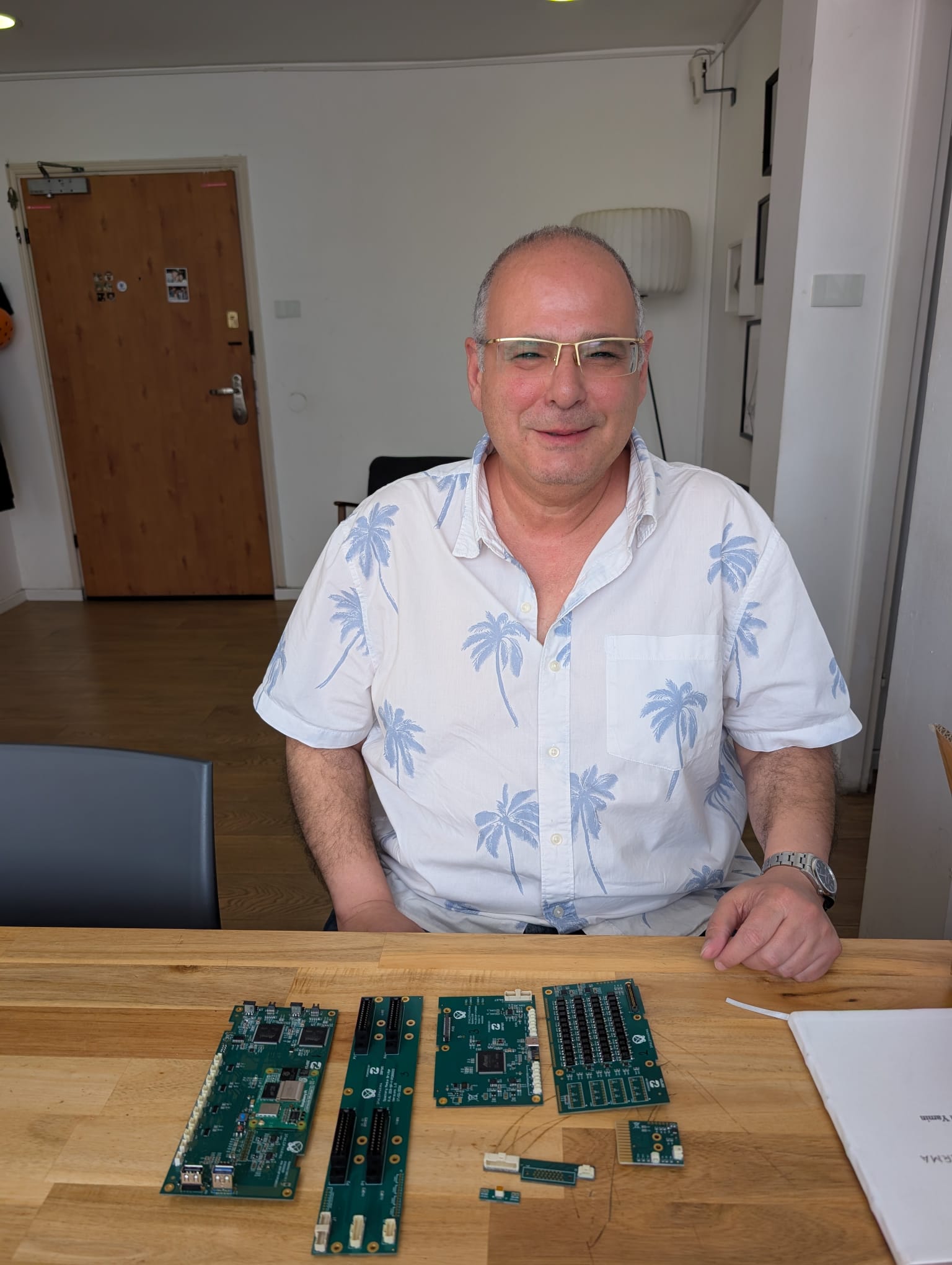
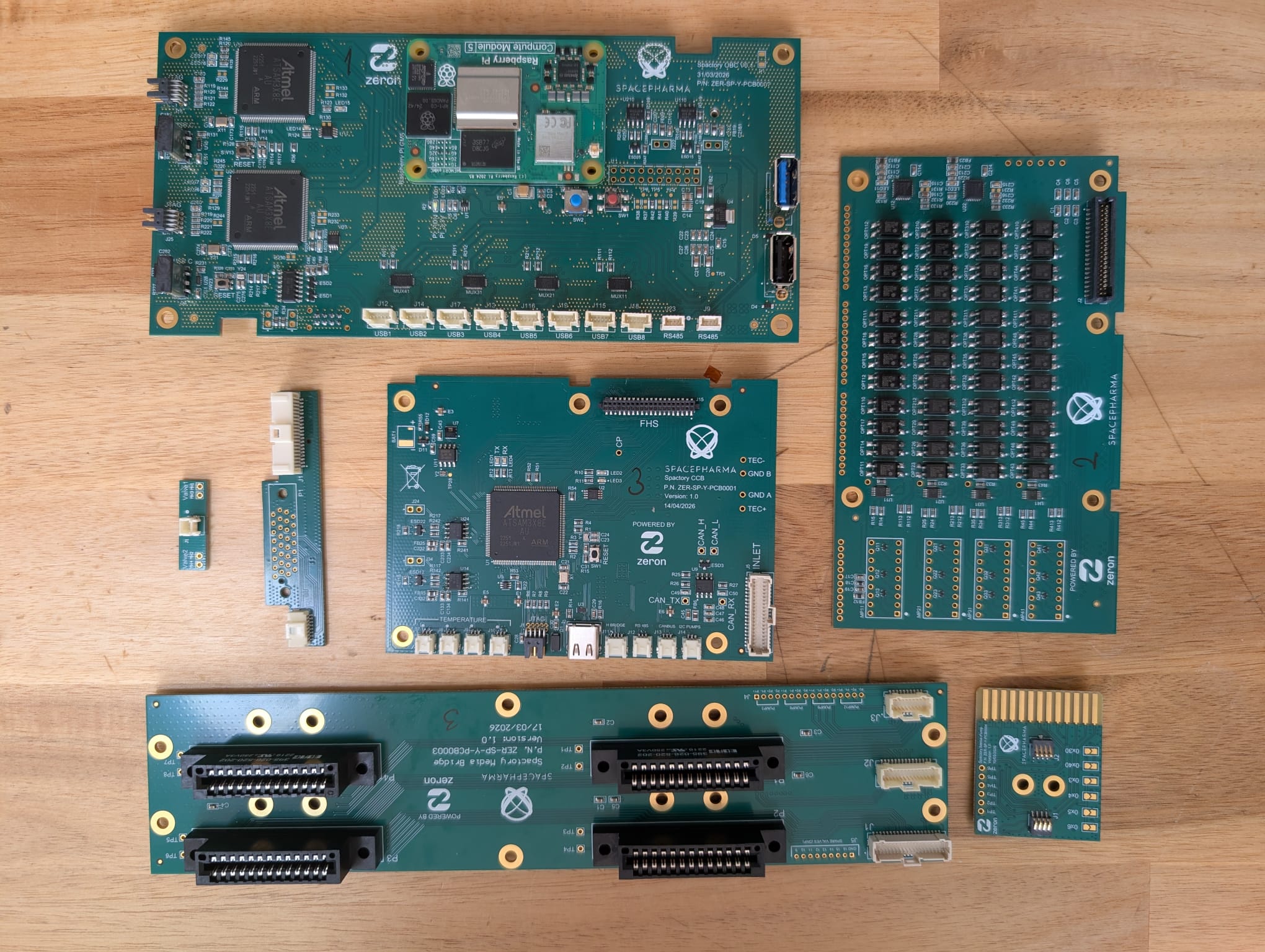
One Test-bed with 11 custom boards – 1 Manager, 4 Carttige

Communication:

SpaceWire, RS422, Ethernet, RS485, I2C, SPI, CANBUS

Chip:

Microchip & CM5

Design & Engineering partner:

SpacePharma

Development languages:

C++ & Python

Technical Deep-Dive

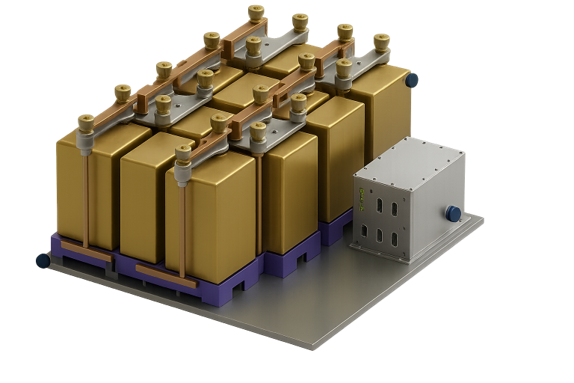
In microgravity, protein crystals grow in near-perfect 3D lattices — larger, purer, and more uniform than anything achievable under Earth’s gravity. That structural advantage opens the door to drug formulations and protein-target interactions that simply cannot be produced on the ground. Spactory turns that scientific reality into an industrial process: a self-contained orbital factory that mixes proteins and anti-solvents, monitors the reaction in real time, and lands a finished pharmaceutical payload back on Earth. A single mission carries eight process cartridges, yields up to 12 kg of final product, and represents over 100,000 doses of next-generation medicine.

Latest Update

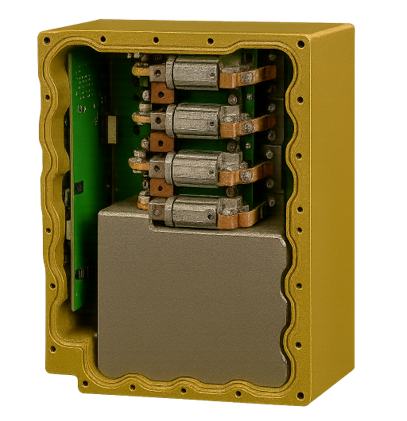
Each cartridge is a sealed, autonomous reactor controlled by a SAM3X8E ARM microcontroller. Inside: eight piezoelectric pumps, sixteen valves, a mixing chamber, 1.5–3.0 L of media storage, and a sensor array covering pH, temperature, flow, and concentration. The cartridges report to a central OBC and power management unit, which handles mission scheduling, telemetry, and the multiple bus protocols required for ESA integration — SpaceWire and RS422 for the spacecraft interface, Ethernet, RS485, I2C, SPI, and CANBUS internally. The engineering challenge is the operating envelope. Hardware that survives the vibration profile of a Vega-C launch, tolerates radiation and thermal cycling in orbit, and still delivers laboratory-grade fluid control over a full mission — that’s a different design discipline from terrestrial medical hardware. Our approach: industrial-grade components with proven space heritage, redundancy on every critical path, and an offline-first architecture so the system never depends on a live link to operate.
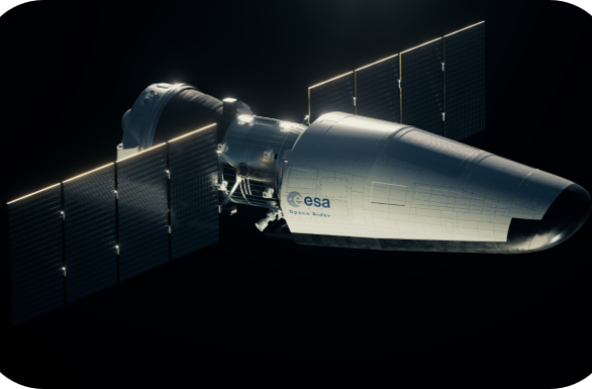
November 2025 update. Nine custom boards are now in production — the full electronics stack for the Cartridge and OBC. Until now we developed against the Microchip EVB; in the coming weeks we replace it with our dedicated hardware. Bench testing and Test-bed integration are running in parallel. Next milestones: ground system operational by mid-2026, test flights and factory stabilization through 2027, and first operational factory mission in 2028.